We’re Riding So Hard for Sales, We’re Leaving Customers Behind

Content Insider #970 – Satisfaction
By Andy Marken – andy@markencom.com

Source – “The Wild Bunch,” Warner Bros
“Harrigan used to have a way of doin’ things. I made him change his ways. A hell of a lot of people, Dutch, just can’t stand to be wrong.” – Pike Bishop, “The Wild Bunch,” Warner Bros., 1969.
Right now, you’re running fast; totally focused on getting the next great technology, tool, app, solution out the door, aren’t you?
Anything with AI in it, around it and somewhere in the name is a solid winner…in your minds.

Maybe you need to sit back and take a deep breath because you – and your competitors – have lost sight of the most important part of the firm’s growth … the customer.
Long before AI became the world’s rallying cry, Intel’s Andy Grove (one of the founders and CEO of Amazon who passed away several years ago) and Amazon’s Jeff Bezos (former founder, CEO) shared a common focus on what counts.
They just expressed it differently.
Both had engineering backgrounds, but Grove was focused on staying ahead of the technology curve to meet his business customers’ requirements.
He was hellbent on delivering replacements for the company’s existing products before competitors did.
Or, as he said, “Success breeds complacency. Complacency breeds failure. Only the paranoid survive.”
Bezos, on the other hand, focused on attacking and replacing existing business models. Then he did something real sneaky; he added offering on top of offering to strengthen Amazon’s consumer relationship. “Our customers are loyal to us right up until the second somebody offers them a better service,” he noted.
Ask any marketing person and he/she will say that’s obvious and now we have the tools to make it all happen for us.
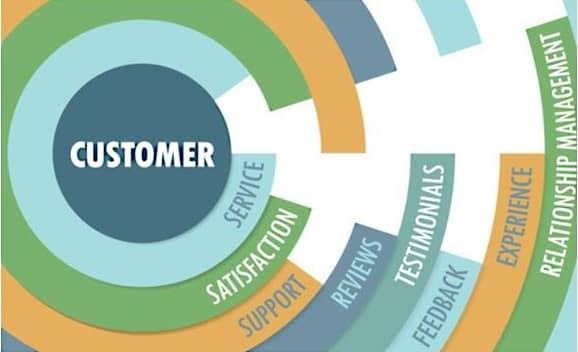
They’ll tell you the customer is the most important person on the planet to them and everything they do is done to make him/her satisfied.
Source – CIO
Perfect Focus – There isn’t an organization around that doesn’t direct everything toward its customers and satisfy them. All too often, they come up short by focusing on execution that is easier on the team and the individual.
It makes a great mission statement, but something gets lost in the translation.
To deliver that satisfaction, marketing/support teams implement the latest service and AI tools that promise to make support faster and easier for the customer.
Who’s kidding who?
The tools you put in place are all about gathering as much data about them as possible so you can sell them as much stuff as possible.
If a problem arises, point out that you gave them the online resources to solve the issue … themselves.
It’s all about making things easier for your marketing team and if the customer is satisfied … cool!
Smart firms change that focus.
They know customer satisfaction is an organization-wide issue and needs organizational support.
The first step is to be an employee-centric organization.
Source – InMotion
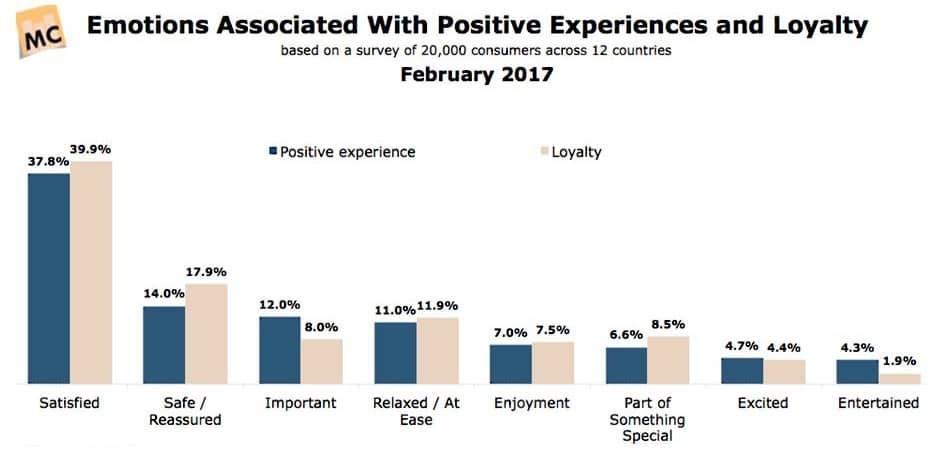
Positive Feedback – Customers that have positive results with a firm’s products and their personnel have a strong, positive view of the entire organization.
A firm that delivers amazing customer service has to have amazing employees.
Herb Kelleher, founder and chairman emeritus of Southwest Airlines, was one of the earliest bosses to promote the idea of employees first.
He explained his position by saying, “Employees come first and if employees are treated right, they treat the outside world right, the outside world uses the company’s product again, and that makes the shareholders happy. That really is the way that it works.”
It has worked pretty well for them since 1971 in an industry that really just rents seats.
What Herb really said was that good people who are treated/supported properly will do their best to deliver superior products/service.
Executives at New Voice Media noted that positive, friendly, helpful employees have a major influence on customer loyalty.
Because of that loyalty, 69 percent would recommend the company to others.
Surprisingly, 42 percent of the customers said they are prepared to spend more money with these firms.
Regardless, most of the new tools and neat things marketing puts out there aren’t really for the customer.
Nope, they’re designed to make it faster and easier for the company.
Opening every communications channel available so consumers can reach the right person in the firm and get the right answer is only a start.
Customers still go through an endless maze of phone and AI-enabled online guides that make them repeat the same basic information again and again and…
That sorta’ says the customer-centric tools are buffers between real people to streamline things for the firm.

Source – Ted Soqul/Corbis
Negative Results – When consumers have a negative experience with a firm’s products or personnel, the relationship deteriorates quickly; and in today’s online world, those negatives can be quickly passed on to people throughout the community.
According to Accenture, the tools often get in the way of quality customer service.
Their recent global consumer report found the hurdles to positive experiences have remained common issues for a number of years:
- Having to contact the company multiple times for the same reason (69 percent)
- Wading through a number of “Hi, I’m Sally, I’m Bill and I’m going to take care of you”
- Having to repeat the same information to multiple chatbots/people or go through multiple channels (62 percent)
- Dealing with unfriendly, impolite employees or really naive bots (62 percent)
- Dealing with employees or systems that can’t answer the questions (60 percent)
- Being placed on hold for extended periods (60 percent)
Perhaps that’s why New Voice Media found that 44 percent of consumers take their business elsewhere after experiencing poor service.
In fact, 98 percent have switched at least once or twice in the last year.
The worrisome point New Voice’s research uncovered was that 53 percent are put off from calling a business because they are afraid, they’re not going to immediately connect with a real person.
So, they switch even before reaching out for assistance to resolve the problem because companies have so automated their systems customers won’t even try.
A few firms like Citibank, Geico, OWC and others have recognized and highlighted this concern in their marketing efforts.

Source – Telecomblog
Personal Touch – Increasingly, customers like to go online and resolve their service/product problems on their own. But there are times – lots of times – a friendly voice on the other end of the phone reduces a lot of stress.
On their websites and in their marketing efforts, they emphasize that when you call, you’ll immediately talk with a real person who will stick with you and work with you to resolve the situation.
If the call is made in off hours or support people are tied up, they ask you to leave your call-back information and they will call you.
And they do!
Regardless of how enamored we are with AI, people prefer this personalized contact to resolve product/service complaints (84 percent), get a quick answer to questions (61 percent) or get an unbiased view or recommendation (55 percent).
Consumers are already a little stressed out when they find they need assistance with a firm’s product/service. They don’t need to be kept on hold or go through a support maze because of your poorly designed business processes.
The support experience shouldn’t be a frustrating, time-wasting exercise in futility or endurance.
Companies have to be more concerned with the way customers feel because technology (social media) has made it much easier to praise (or pan) the organization.
Source – MarketingSherpa
Customers Know – Believe it or not, consumers are really people who know what they want and need. That especially applies to the companies and brands they deal with, buy from, and rely on.
Historically, customers told 5 people when they had a good experience and 24 when they had a bad service experience.
Today, when they have a positive or not-so-positive experience, the first place they go to voice their praise or complaint is online.
Instantly, “the world” knows how the individual feels about the level of service provided.
Ouch!
That’s why it is increasingly important for organizations to listen to customers.
No, we didn’t say monitor what they’re doing; we said listen.
That means promptly, courteously acknowledging the individual, summarizing and responding back to the person, thanking them for positive service comments/feedback; and when problems are raised, resolving them immediately.
Keep the response conversational, repeatedly addressing the customer personally by name and showing an understanding of the problem’s specifics.
All of your team members should have a sound understanding of the products and services and offer simple, practical solutions and even useful tips on how to get the most from the product and avoid future problems.
Friendly, positive assistance; even to the point of taking them offline to a specialist; will reassure the customer that he/she is important and that they are dealing with a company that respects their customers.
Companies that “get it” and understand the importance of delivering a positive experience enjoy strong, positive returns, especially when the social media world is only a few clicks away.
Source – Accenture
Satisfaction – When customers have positive experiences with firms, they develop a strong impression of the firm and like to pass along recommendations to others.
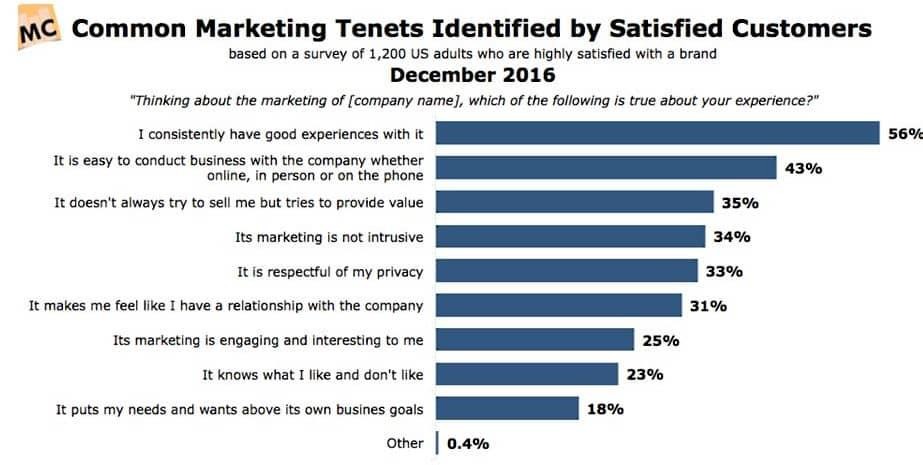
Comparing their customer research responses with MarketingSherpa, InMotion noted that customers who consistently reported good experiences had a strong degree of satisfaction.
The second most popular response was that it was easy to conduct business with the company across all communications channels – online, in person, on the phone.
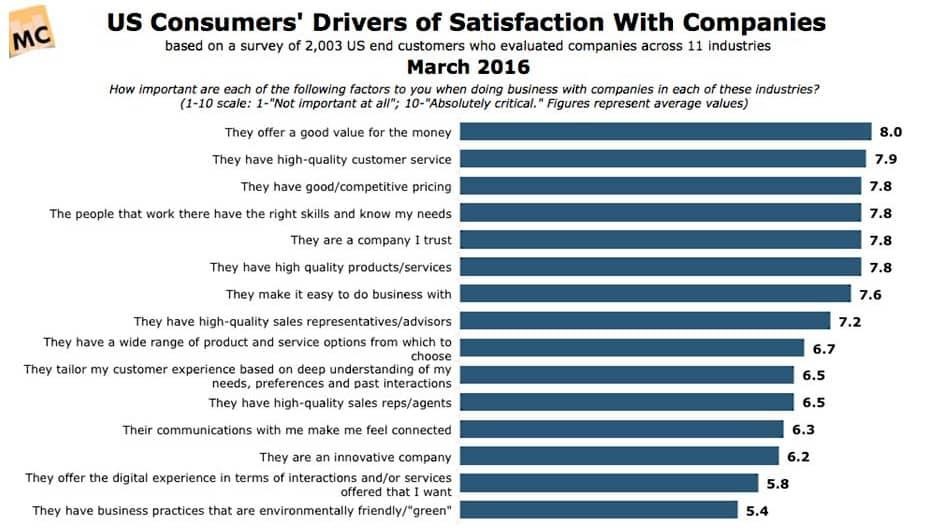
Regardless of the consumer study; value, customer service, quality and trust are the core drivers for a customer’s satisfaction.
They are far more important than product selection or marketing’s rush to try and develop personalized consumer contact.
Poor service is consistently the major reason for consumers to switch brands/products; and 8 out of 10 people surveyed said that their previous product/service provider could have done something to keep them as a customer such as:
- Resolve the issue on the first contact
- Provide better live or in-person customer service
- Offer the same promotional pricing as new customers receive
Even in our increasingly AI (augmented intelligence)-enabled environment, people still prefer dealing with human beings for service/support.
Consumers today are quick to show their satisfaction–and dissatisfaction.
Consumers today can be more pro-active and can make their likes/dislikes more widely known … to a much broader audience.
You know…spread the word.

Source – Warner Bros.
They may buy your product because it’s a solution, but they are also quick to tell you and others how they really feel about your product.
And as Dutch Engstrom noted about complaints regarding problems, “That ain’t what counts! It’s who you give it *to*!”
Andy Marken – andy@markencom.com – is an author of more than 800 articles on management, marketing, communications, industry trends in media & entertainment, consumer electronics, software, and applications. An internationally recognized marketing/communications consultant with a broad range of technical and industry expertise especially in storage, storage management and film/video production fields; he has an extended range of relationships with business, industry trade press, online media, and industry analysts/consultants.