Surprise – Everyone Watches Sports
Content Insider #962 – All In
By Andy Marken – andy@markencom.com

“They need work, yeah. And they need a lot of work. But I see a bunch of guys in that team, including her, who all work multiple jobs just to play. Who’ve got more heart and they’re dreaming bigger than nearly any of the jaded fools that mess around in the pro leagues for money they don’t deserve. Don’t tell them I said that.” – Thomas Rongen, Next Goal Wins, Imaginarium Productions, 2023
We don’t know how, when or where but it just seems to us as though sports have taken the sport out of sports.
O.K., we’ll admit we’re not a sports fanatic who drops an estimated $88/mo. to ensure they have every streaming service – ESPN, Fubo, DANZ, YouTube TV, Fox, Telemundo, Apple TV, Paramount +, name your favorites – just so we don’t miss a game, fight, race.

Well maybe if Telemundo brought in Andres Cantor to announce we might but it would just be to hear him call out the goals…up to 38 seconds screaming GGGOOOOAAAALLL the dude flat rocks!

But as our kids constantly remind us, we’re far from normal so we accept our lack of sports viewing just as normal0.
Once the bread and butter of linear TV, streaming services quickly saw that while a solid roster of good, interesting shows/movies was a sure way to win new subscribers, sports kept them subscribed.
While sedentary sports viewing isn’t our thing the events used to be guaranteed profit highlight for linear TV until streamers found that airing the live sporting events was a sure way to sign up subscribers and keep them coming back for more.

Rush for Eyeballs – Sports enthusiasts are almost as fanatical in ensuring they have their sport, league, team event available to them as Black Friday shoppers.
Streaming is now making major moves to capture this audience and add documentaries and docuseries around the sport to win/keep subscribers but more importantly to give advertisers new ways to connect with fans/consumers.
Along the way, they also raised the visibility/interest in women’s as well as peripheral and emerging sports.
Netflix quit touting their subscriber win/loss figures a couple of years ago – analysts still say they have the best retention numbers (about 2 percent cancellation any given month) – and instead have been promoting how many people watch their ads which must be making advertisers happy because they reported profits of over $2.5B last quarter.
To win over subscribers and advertisers, the Ted Sarandos/Greg Peters team has added a growing collection of sports content including WWE wrestling, boxing, NFL and other contests as well as really interesting shows like Formula 1’s, Drive to Survive; golf’s Full Swing; basketball’s The Last Dance and Last Chance U; and gymnastics Simone Biles Rising, Cheer and who knows maybe even Sydney Martin in Christy.
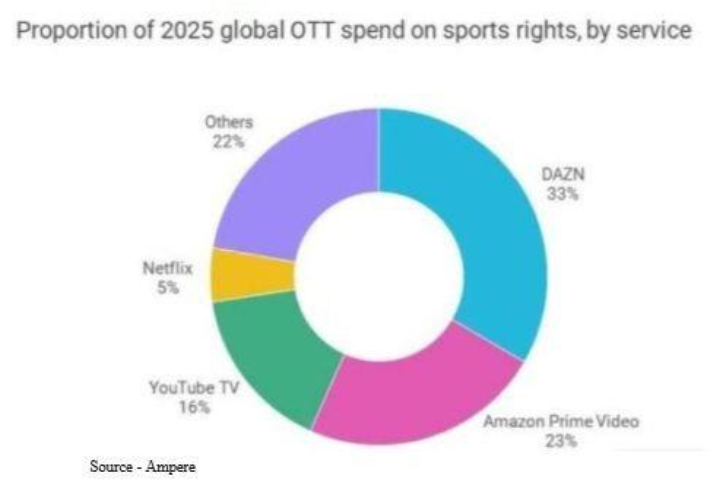
Focused – While the cost of every sport varies for the streaming services, DANZ has said they want to be the sports channel and have acquired as many events/activities as possible, but it’s not economically feasible to tie up all sports.
Of course, they’re far from alone in the sports race with DANZ doing everything they can to be your first choice for sports – live and on demand.
Amazon Prime made a somewhat strong bid to win over fans when they added Thursday Night Football to their lineup.

On the Road – The somewhat surprise but office hit and streaming winner F1: The Movie, raised the visibility and interest in driving projects for Apple TV and a number of other streaming services. It’s especially true of the growing awareness/interest in the sport for females and the younger generation.
But perhaps the biggest sports leap came when Apple TV acquired F1: The Movie followed by an exclusive partnership with Formula 1 to carry a continuing series of practice, qualifying, sprint sessions as well as the Grand Prix and other races.
And of course, Netflix was quick to see the wisdom of Apple’s move and snapped up F1: The Academy series which our daughter hopes will continue.
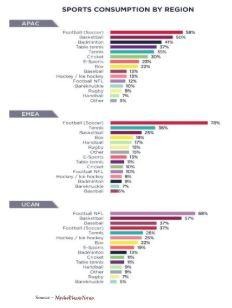
Linear TV is struggling to remain relevant to households and while the must see sport varies around the globe, the category is the one constant the networks are struggling to hang onto – it’s estimated that 40 percent of households still view events on linear TV – regardless of where people live.
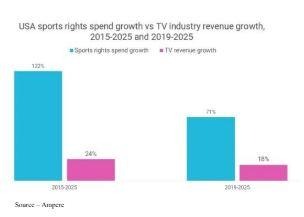
Rising Cost – When streaming services jumped into the sports arena, rights became more costly for all of the bidders, but the return on investment has dropped significantly for linear TV services compared to streamers and it will continue.
The challenge for the linear networks is that the cost of rights has continued to steadily rise for them while revenue has dropped because streaming services have developed new approaches to identify and connect with viewers and sports fans which are very attractive to advertisers.
Streaming sports can precision target viewers combining the live event’s scale with refined digital advertising capabilities.
The precision abilities of streaming are redefining how leagues networks and tech providers engage with audiences, generate added revenues and increased expectations from the sports fans.
Streaming has led to both new opportunities and challenges for franchises, streamers and advertisers while raising subscriber expectations and demand.
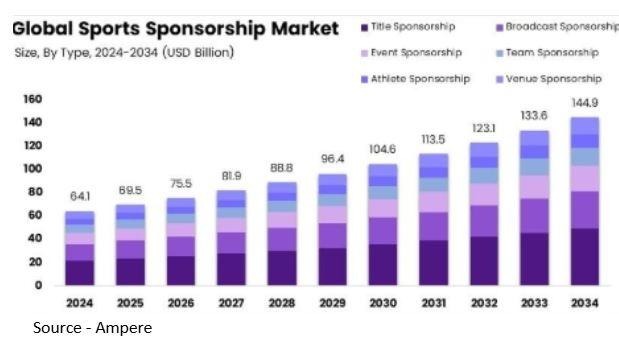
Into the Game – There are almost a limitless number of ways marketers can increase their visibility in a specific sport to attract customers so visibility will become increasingly difficult and more expensive.
The new levels of subscriber/viewer interest have had a major positive financial impact for leagues, franchises, games and some players as households increase their VoD subscriptions to follow their particular sport and team.
The new level of sports streaming has also increased the interest in women’s events and in niche or emerging sports.
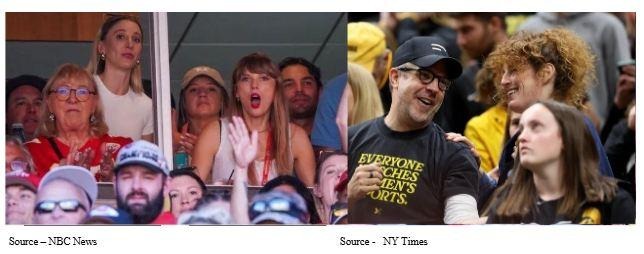
Stars vs. Stars –While cameras always scan the event’s audience for famous entertainers and political figures, the WNBA got it right when we started to see their “everyone watches women’s sports” shirts driving home the fact that sports interest is not just exclusive for men.
The networks and teams had a momentary boost in viewership when people like Taylor Swift attends the KC Chiefs football game but the growing interest in female teams in basketball, soccer, rugby and even female solo events like golf and tennis have garnered a significant boost in event attendance and home screen viewing.
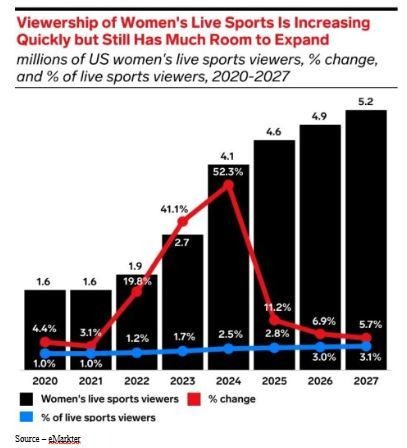
Steady Increase – The recognition that women are an important part of sports attendance and viewership has increased significantly in recent years, attracting a new set of companies interested in influencing viewers and adding more opportunities for everyone to be involved in the field.
Viewership of women’s sports has increased significantly over the past few years driven by higher media coverage and growing fan base that includes males and females, especially in the GenAlpha and Z groups.
Last year, women’s basketball and futbol enjoyed more than 450M viewing hours–a better than 430 percent increase from just a few years ago.
More importantly, the audience has grown steadily over the period especially among the more dedicated fans, which has seen a better than 60 percent increase.
And the popularity isn’t solely among women with Ampere reporting that 75 percent of men are increasingly watching women’s sports.
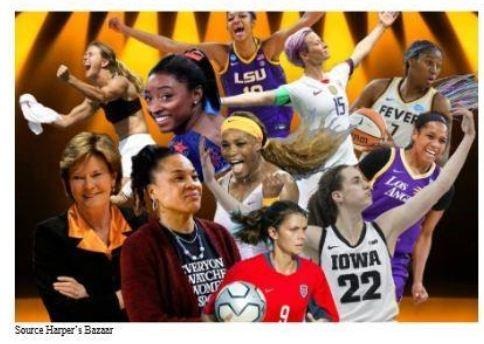
Athletes Earnings – Females in both team and individual sports are leveraging their professional accom0plishments to increase their earnings and, unfortunately, their earnings are still way behind that of males in the arena.
Whether it’s individual sports figures like Simone Biles, Coco Gauff, Serena Williams or team sport superstars like Caitlin Clark, Mia Hamm, Aitana Bonmati, Marta; women athletes are filling stadiums, arenas and parks and they’re all determined to capitalize on their years of practice, participation and the outsized growth.
Women’s sports value exceeded $2.4B last year while the industry projects the fanbase to increase by more than 62 percent and Nielsen projects the global audience will continue to significantly increase in size and loyalty in the years ahead.
This presents excellent opportunities for marketers to gain significant visibility with their target male and female audiences, especially in major international markets where women’s sports are experiencing dramatic growth.
Nielsen noted that women now form a larger share of fans for both women’s (47 percent) and men’s (42 percent) sports which creates new, diverse and highly engaged audiences with highly tailored marketing and brand opportunities at sports venues, as well as with leagues, teams and individual players.
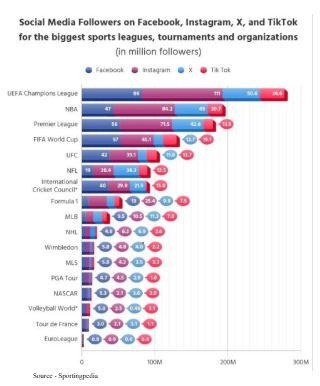
Social Connection – Leagues, teams and individual athletes have also carved out their niches in social media to connect with fans and followers providing added marketing opportunities for companies to connect with customers.
Of course, no strong marketing effort by companies would be complete without closely associating the brand with team/player social media – Instagram, TikTok, Facebook and YouTube.
The key benefits are that content/messages can be tailored to the strengths of each platform as well as the team/player.
It’s a fantastic opportunity to engage with fans and keep your message(s) relevant to the target audience.
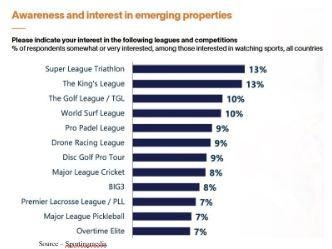
Rising Stars – While a lot of people think of sports only in terms of the major activities, the increased coverage of sports and events has also increased the visibility and opportunities for sports that are just beginning to attract larger and larger audiences.
This becomes even more important for organizations that associate themselves with the emerging markets because visibility is even greater and much more economic.
Sports like pickleball, teqball, exports, drone racing, footgolf, flag football, billiards, lacrosse, squash, rugby, acrobatics, equestrian and other sports have large numbers of participants and followers which may not challenge football and futbol but have loyal social media audiences that can be extremely economic and valuable to an organization’s total marketing effort.
There are only two areas we take issue with when it comes to sports and that’s the inequity of player compensation and betting.
It has only been in recent years that women’s sports have received media support and that’s probably only because someone at the network or streaming service suddenly had an epiphany that 50 percent of the people are female and perhaps, just perhaps, they’d like to see someone like themselves on the court/field, cheer for them and follow their careers.
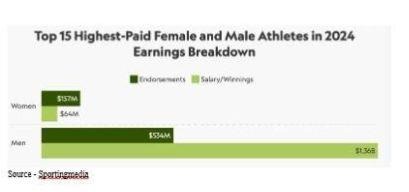
Inequity – While women are attracting a growing and committed following, they have been slow to earn the same level of financial rewards as their male counterparts; but this will have to change in the future.
Okay, we admit that we didn’t give players’ salaries a second thought until the Bay Area finally had two basketball teams – Warriors and Valkyries – with league leaders like Stephen Curry and Caitlan Clark.
We don’t compare their individual talents, but we were amazed when we suddenly learned that their salaries weren’t even in the same universe – Currey will earn $59.61M this year while Clark earned a little over $78K for the season.
And the salary disparity is the rule … not the exception.
We’ve heard all of the excuses – the market determines salaries, it’s basic economics, limited primetime slots, minimal budgets.
Females weren’t/aren’t less talented, entertaining and didn’t leave as much on the court or field.
It was simply a given based on deeply ingrained biases that prioritized men’s sports and their “value” over female players/teams.
We believe/hope that in the coming years corporate sponsorships and increased revenue sharing will take place so that female players value will be fully realized and greater pay equity will take place.
That recognition certainly hasn’t hurt tennis, golf and gymnastics where people like tennis’ Coco Gauff earned $37.2M while her nemesis Naomi Osaka took in about $40M, Serena Williams earns about $50M, gymnast Simone Biles $20M, and soccer star Alex Morgan racked up about $15M.
No, we’re not jealous even though their salaries are way north of what we make a year but, in our opinion, they’re worth it.
And the other female athletes should be similarly compensated for their contributions to their sports, the leagues, the viewing channels and the advertisers.
It’s not simply a gap between the two sexes compensation; it’s the Grand Canyon.
For us sports are simply a way to get good, healthy exercise and to stay in reasonably good condition but for them it’s a job/career and like it or not an extremely short job/career.
So, they should be able to earn their fullest potential while they can.
The value of their teams has risen dramatically…maybe salaries will follow?

Mobile Betting – The widespread ready availability of sports betting apps is probably hurting sports more than it encourages people to follow franchises and individuals–especially among people who can ill afford to lose.
The other major issue we have with sports isn’t with sports but the massive gambling industry that has grown up around professional and amateur sports.
Okay we’ve had a history of athletes getting “caught” gambling and they were quickly dealt with – fired, banned from the sport, fined – and while the punishment might have been sufficient for the act, the way sports betting has taken off around the globe is ridiculous and perhaps even sick.
We don’t gamble, even when we go to Las Vegas several times a year for conferences/conventions.
Sports gambling is a multi-billion-dollar industry because online and mobile betting was legalized and in fact has partnerships with the major sports leagues.
Major companies like FanDuel, DraftKings, BetMGM, Ceasars Sportsbook and a significant list of other firms use sophisticated data analytics and risk management strategies to keep people coming back for more while making a tidy profit.
Frankly the idea of betting on a given game or obscure things like how many yellow cards a participant will receive, what the final point spread is going to be, or who will be injured – and the type of injury – in a given game doesn’t make the event any more interesting to us.
It does bother us that according to one study about a quarter of bettors reported that they were unable to pay their bills because of their wagers.
In addition, the idea that the leagues and teams are “endorsing” gambling (receiving a profit from the wagers made) sends the wrong message to people who are already susceptible and vulnerable.
Then at the same time they turn around and punish a player for betting on his/her event seems equally ridiculous.
We know there’s no way to eliminate sports gambling, but we still feel it diminishes the professionalism of the industry.
Of course, we have also never bought a lotto ticket – don’t know how, don’t want to know.

But when we do watch a sport it’s interesting to us in and of itself.
It’s a little like Tavita said in Next Goal Wins when he addressed his Samoan gods regarding their coach Thomas Rongen, “We’ve become quite attached to him. It’s like finding a lost white kid at the mall and telling him which way to go.”
But then, the Samoan soccer team played for all the right reasons … the fun of the game.
That’s really the outcome we should want for all of our sports…except if it’s your career then being paid is also important.
Andy Marken – andy@markencom.com – is an author of more than 900 articles on management, marketing, communications, industry trends in media & entertainment, consumer electronics, software and applications. He is an internationally recognized marketing/communications consultant with a broad range of technical and industry expertise, especially in the storage, storage management and film/video production fields. He also has an extended range of relationships with business, industry trade press, online media, and industry analysts/consultants.