The Road Ahead: How Creators Are Combining OpenAI’s GPT-6 Astra with Tripo AI for 3D Generation

SAN FRANCISCO, Sept. 14, 2026 /PRNewswire/ — The official release of OpenAI’s latest model, GPT-6 Astra, has ushered in a new chapter in the world of generative 3D. By combining Astra with Tripo’s 3D-native foundation models, creators are turning ideas into interactive 3D experiences faster than ever before.
In its official launch video, Astra created a 3D game using voice prompts, demonstrating the potential of large language models (LLMs) to build interactive 3D experiences. While LLMs such as Astra can accelerate ideation and interaction, high-quality 3D generation requires specialized capabilities, including high fidelity, high efficiency, and topology that supports downstream workflows such as rigging, animation, and real-time production.
That’s where Tripo’s 3D-native foundation models come in. The H series focuses on improving fidelity for complex shapes and details, while the P series optimizes mesh structure, topology, and editability. P2.0 supports native quad topology, polygon-count control, and separable parts. By addressing some of the major challenges at the generation stage, Tripo enables creators to spend less time editing assets and more time transforming ideas into 3D assets.
The road ahead for generative 3D starts to emerge: LLMs can make creation more accessible, while 3D-native models provide the specialized intelligence needed to turn ideas into production-ready assets. As projects become more ambitious, these capabilities will continue to amplify each other.
The popularity of Astra has shed light on 3D generation, which is welcome news not only for creators but also for Tripo. The company is getting closer to realizing its mission of democratizing optimal interactive experiences with artificial intelligence.
Tripo continues to invest in native 3D intelligence so its models can learn recurring patterns in shape, topology, and part relationships. By learning directly from 3D assets and editing workflows, the aim is to reduce the trial and error needed to generate and revise each asset, improve fidelity and efficiency, and deliver more reliable results under real production requirements.
Tripo’s research roadmap extends from generating shapes to understanding structure, editing existing assets, and supporting motion and interaction.
Since Astra’s release, fans of Tripo have put their creativity into full gear. From house pets to anime characters, from Witchcraft School to Tang Dynasty architecture, people are creating interactive 3D worlds like never before. And here’s the drill: Tripo generates the 3D assets; Astra assembles and animates them.
Here are a few examples of 3D content from creators combining Tripo with Astra.
An Alice in Wonderland Game Built with Tripo P2.0 and Codex
Bringing scenes from Alice’s Adventures in Wonderland to life has long been a dream for creators Simon Lee and Ring Hyacinth. They used Nano Banana to generate reference images, Tripo P2.0 handled fast 3D modeling, and Codex built and assembled the scenes, effects, and interactions. With this workflow, they turned the chapter “Advice from a Caterpillar” into a polished game, and their behind-the-scenes video landed on Bilibili’s trending list, a major Chinese video-sharing platform with a large community of young creators and fans. The game tutorial has exceeded 120,000 views on X (formerly known as Twitter).
A World of Warcraft Fan Game in 90 Minutes
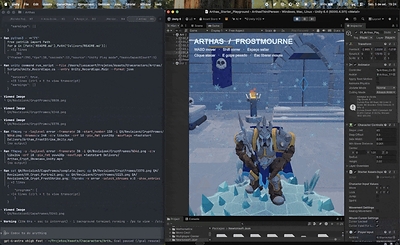
@luccacerf, a user who describes himself as neither a game developer nor a designer, adopted an Astra → Tripo P2.0 → Blender → Unity workflow to build a World of Warcraft fan game with just three prompts in 90 minutes.
Tripo H3.1 + Blender MCP + Astra: Stefan’s 3D Workflow
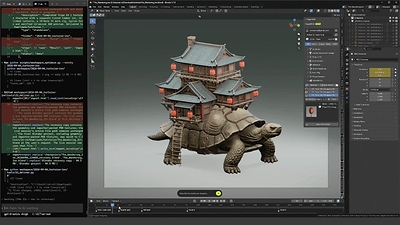
Creator Stefan (@Stefan_3D_AI) first tried having Astra generate 3D models directly, but the quality fell short of his expectations. So he switched to a more mature workflow: model with Tripo H3.1 and Blender MCP, then hand the assets to Astra for assembly and animation. The result is a set of finely textured, highly polished 3D pieces.
Anime Characters Brought to Life
This “Tripo models, Astra brings them to life” approach has also given many anime fans their first chance to animate characters.
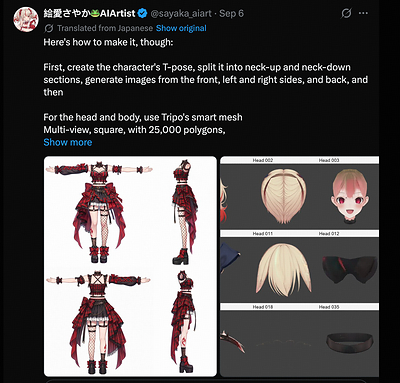
Creator @sayaka_aiart, for example, made a smooth anime-style dance video that has passed 200,000 views on X.
Creator Nano (@Dstudio_ai) used Astra to add animated facial expressions to an anime character generated with Tripo, earning more than 1,300 likes on X.
About Tripo AI
Founded in March 2023, Tripo AI is a global leader in the development of AI 3D foundation models and world models. Tripo’s state-of-the-art technology enables users to turn ideas and images into 3D content/assets at unprecedented speed. From industry professionals to everyday creators, Tripo AI, has been adopted by tens of millions of users worldwide to create 3D content for gaming, film and animation, 3D printing, product design, robotics, architecture and much more. Known for fast generation and high-quality outputs, Tripo AI has been consistently ranked as the world’s best AI 3D platform.
Our research also explores how AI can generate and interact with entire worlds by building world models.
 View original content to download multimedia:https://www.prnewswire.com/news-releases/the-road-ahead-how-creators-are-combining-openais-gpt-6-astra-with-tripo-ai-for-3d-generation-302878370.html
SOURCE Tripo AI