
Good Horror Films Aren’t Budget Busters
Content Insider #938 – Oh Yeah
By Andy Marken – andy@markencom.com

“I promised you I wasn’t going to buy a Ouija board. I didn’t buy a Ouija board. I borrowed a Ouija board.” Micah, Paranormal Activity, Blumhouse Productions, 2007
Anyone who tells you they watch whatever they want at home is either single or has his/her own TV room.
Us? No and no!
We started thinking about the subject this summer when Jaws celebrated its 50th anniversary and we read it was classified as a horror movie.
Actually, we prefer a good horror movie … not one where we have to mop the blood off the floor when it’s over but a sci-fi, end of the world or post-apocalypse movie.
We usually end up watching them on our computer screen in our home office because well … because we get outvoted.
The films we watch can be good–so bad they’re good or simply adrenalin pumping.
But, if they’re just gross, we pass.
After all, we see, hear/experience enough of that kind of insanity every day right now.
Yeah … we need something worse than today’s news.

But it turns out there aren’t any really neat boxes for horror films as there are for projects such as rom-com or westerns.
In fact, even a movie in these categories can also be a horror film … think last year’s Searchlight Pictures Nightbitch and Universal’s 2011 Cowboys & Aliens.
When we started digging into the subject, the first thing we did was turn to one of the best sources we know…Stephen Follows’ The Horror Movie Report.
Honestly, if you want to know anything/everything about horror flicks and how to make money doing them …skip the rest of our observations and grab his big, monstrous report.
It won’t guarantee you a money-making film, but it will at least give you some guardrails.
O.K., so you’re still here … thanks.
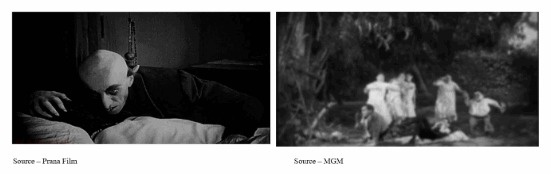
Horror films have been around since filmmaking’s beginning and were probably very intimidating back in the silent days because they didn’t rely on gimmicks, just people’s expressions and the cinematographer.
Nosferatu (1922), a German vampire film by F.W. Murnau, is considered the first horror film.
The courts later ruled it was based on Briam Stoker’s copyrighted book, Dracula.
While the court ordered all prints of the film to be destroyed, some survived and marked the first use of colored film to set the scene’s mood but his sharp fangs, piercing fingernails and dashing good looks also helped a little.
Horror films became an important genre in the Americas when talkies took off.
Tod Browning established himself as the father of American horror–especially when he pushed the boundary of decent taste with Freaks in 1932.
The cast was made up largely of circus “oddities” with many of the actors having real disabilities/deformations repulsing the audiences.
The film marked the end of Browning’s filmmaking career but opened the door for a whirlwind of Universal Studios projects including Frankenstein, The Mummy, and Werewolf of London.
But no country or region has had a corner on the horror market.
There exist ghosts, boogiemen, mysterious happenings and unexplained eerie tales that have been told and retold everywhere on the planet.
Some can be explained. Some can’t.
More weird stuff is emerging every year from the “fertile” minds of creative men and women everywhere.
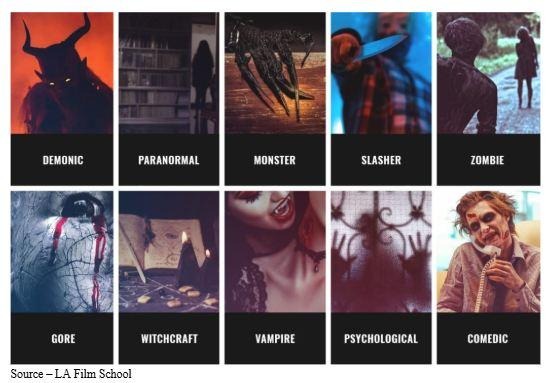
If you’re in the mood to make horror films (or watch them), you will generally lean toward an even narrower category of horror.
The industry has further subdivided horror films into 10 categories, and they don’t appeal to everyone equally and in fact according to Statista preferences will vary over time as you age.

There are a lot of factors that go into folks deciding they’re going to create a horror film in one of these subcategories, including the demographics of the filmmakers as well as the anxieties, fears and uncertainties of the target audience.
The highest percentage of horror film audiences are Gen Zers, people in the 19-24 age group who made up
more than a third of the projects’ audiences with teenagers being the largest age group.
According to Statista’s analysis, 72.4 percent of the audience is under 45.
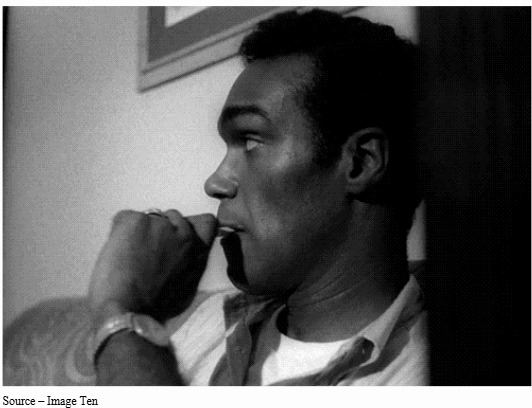
Wish we had researched horror films earlier so we would have known that sometimes they let us down and don’t have a happy ending.
We’ve watched the film that started the zombie craze – Night of the Living Dead – a bunch of times and every time we’re crushed when the credits roll.
Ben went through so much throughout the evening and he continued to beat the odds, so there was no reason for him to be snuffed when he stepped out on the porch.
Yeah, we scream “Oh s***!” … he deserved better.
You know, like George Clooney being able to walk out of the truck stop the next morning saving the little girl from all the vampires in From Dusk Till Dawn.
Okay, so maybe he had to shoot his own brother – Quentin Tarantino – but hey, it was a righteous shooting.
But there are two things we’ve noticed looking over the horror film landscape:
- Film critics (and award people) just really don’t get it and the best way to get a lot of seats into the theater seats is for critics to give the movie rousing reviews.
- Horror films have excellent percentages of making money, but you can kiss off the idea of getting a statue because the voters look down their noses on everything about the project, even when it makes a crap load of money.
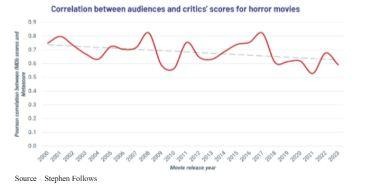
It seems to be a trend that if you do a horror movie to get folks into the movie house, you need to get “the experts” to say the film sucks. The more they hate it, the better the ticket sales are.
And beyond that, if you’re hoping to walk the red carpet and stand before all of your jealous professional contemporaries with a statue in your hands and make some forgettable speech, don’t bother being involved in a horror film.
Back in 1991, The Silence of the Lamb is the only horror film to win the best picture award in the 96-year history of the Academy Awards.
A smattering of other horror films have won awards for makeup, art direction screenplay, sound but rarely – very rarely – best actor/actress.
But…

At the end of the day, creating and/or watching a horror film can be depressing and unnerving.
But if you’re in the video content creation industry to make a living and if you’re lucky, put a little money aside for a rainy day, no film genre will give you a better chance.
The Blair Witch Project and Paranormal Activity were ridiculously profitable, making respectively $194M on $15K budget and $90M on $450K budget.
Of course, their mind-boggling success led to a rush of occasionally good but mostly bad found footage projects.
Yes, they were the exception to the rule; but even with some of today’s over-the-top projects with budgets that averaged $125M to produce/release, they still returned $17M in profits and have become the sweet spots for studios such as Blumfield and A24.
The beauty of horror is that movies can be made faster and cheaper than other genres, generating huge profits.
And with every one that becomes an overnight sensation, you can be sure there will be a ton of knockoffs and very similar projects to follow.
Surprise … people get sick and tired of watching the same and slightly similar plots over and over and they quit buying tickets.
Take scream queen projects.
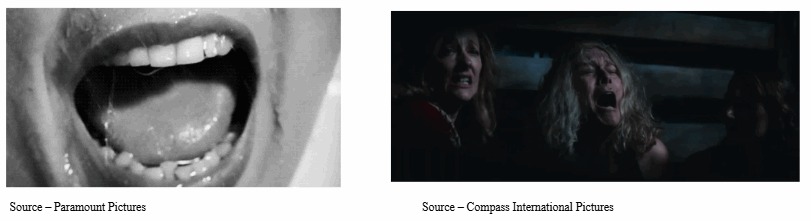
Alfred Hitchcock’s 1960 Psycho was one of the films that set the stage for scream queen projects with Janet Leigh’s great shower scene.
A lot of directors and actresses attempted to reproduce the audience reaction, but it wasn’t until Leigh’s daughter, Jamie Lee Lewis, faced off against the masked killer, Michael Myers, that the audience found someone worthy of the crown in 1978.
While she wasn’t in all 13 of the projects, she did take on Myers in six of the sequels and finally put an end to him in 2022 when he found out she can do more than scream … and it will hurt.
But unlike most other film genre, horror films seem to run in cycles – slashers, gore, witchcraft, zombies and increasingly, today’s sci-fi projects.
If you overlay horror films with cultural and historical events, you’ll see a strong influence of socio-political factors … WWI, WWII, Korean War, Vietnam, Depression(s), Cold War and whatever this thing is we’re in right now… screaming adult children and the unknown contamination they spread.

Yes, horror films feel like a safe place to enter, if even for a little while.
And the great thing for filmmakers is that the cost of entry is very low.
Early on, slasher films were made for well under $1M and the first zombie project – Night of the Living Dead – cost about $100K.
Then, with each knock-off, rip-off and imitation, the budgets rose; but still, the budgets were … reasonable.
Even Jordan Peele’s sociopolitical projects – Get Out, Us and Nope – not only hit the market at just the right time but were completed with reasonable budgets.
While a film budget of $5M might be considered low by today’s tentpole-focused studios, filmmakers can deliver a powerful, creative and polished movie that provides solid production value, rock-solid storytelling and breathtaking special effects.
The cast may not include big names, but today’s equipment is affordable by almost anyone’s standard … most of 28 Years Later was shot with 20 iPhones.
Now we admit we’re not a producer, director, screen writer or cinematographer and don’t feel lavish production improves the value and excitement of a project if it’s overly shot with the real creative work done in post.
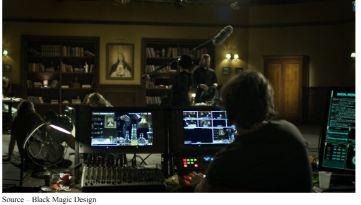
A growing number of indie filmmakers have found they can create a memorable project using shooting gear like high-quality, economic cameras from folks such as Black Magic Design, overshooting every scene and then putting the creative touches on the project with post tools like DaVinci Resolve and Adobe Premiere.
Editors can do wonders for a project by turning raw footage into a spine-chilling narrative.
Today’s digital visual effects (VFX) tools can set the stage for mind-jarring transitions and storyline jumps that would ordinarily be too dangerous or costly to physically produce.
And we can’t forget that sound design can quickly set the stage, so folks know something bad, and jarring is suddenly going to happen.
There’s so much magic that can happen today in post that we would venture to say that the postproduction team might deserve to be listed ahead of the producer/director in the credits.
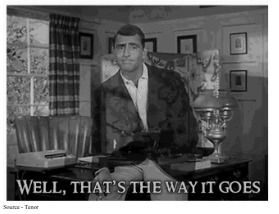
After all, great horror films don’t have to be dripping with blood and guts as Rod Serling showed us in his 1960s TV series The Twilight Zone.
They’re always worth watching again and again when you’re thinking about making a horror film/show and want to appeal to the broadest possible audience.
Twilight Zone is probably watched as much today – Paramount +, Pluto TV, Amazon Prime – as it was when the 156 supernatural morality stories first appeared on TV.
And the lasting audience impression is what everyone in the content creation industry really is hoping to achieve–beyond simply scaring the crap out of the audience or making them feel really, really uncomfortable with what they’re experiencing in real life.
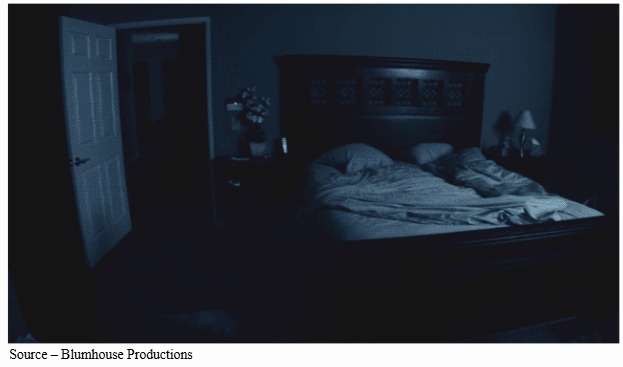
Creatives want the audience to feel what Katie felt in Paranormal Activity when she said, “Well, whatever it is that’s following me, it doesn’t feel… it doesn’t feel human. It feels like it’s… it feels like a monster. I mean like, it wants to hurt me.”
That’s a lot better audience reaction than walking out of the theater or turning off the TV and feeling like Micha when he said, “I’m pretty sure what we did was illegal in Kentucky and 20 other states.”
A good horror film – regardless of the subgenre – should be a show/film that reaches out and communicates/resonates with the audience and ultimately releases them of at least part of their pent-up real fears.
But as we said earlier, Ben should have survived in Night of the Living Dead … killing him off was just plain wrong!
Andy Marken – andy@markencom.com – is an author of more than 800 articles on management, marketing, communications, industry trends in media & entertainment, consumer electronics, software and applications. An internationally recognized marketing/communications consultant with a broad range of technical and industry expertise, especially in storage, storage management and film/video production fields; he has an extended range of relationships with business, industry trade press, online media and industry analysts/consultants.