Global Entertainment Also Means Global Production

Content Insider #948 – Choices
By Andy Marken – Andy@markencom.com
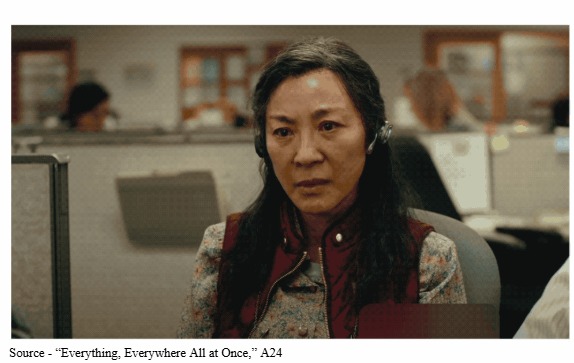
“You tell me it’s a cruel world and we’re all running around in circles. I know that. I’ve been on this earth just as many days as you.” – CEO Waymond, “Everything Everywhere All at Once,” 2022, A24
Look, let’s be brutally honest.
Reed Hastings and his partner, Marc Randolph, didn’t set out with a devious plan to turn the video content, production, and delivery industry upside down.
They simply wanted to convert their customers from expecting to receiving their home movies in the mail to instantly downloading them.

In other words, making the customer do all the work for a monthly fee, all under the guise of being better for the consumer.
No, back in 2007, they simply wanted to give their customers instant access to their rotating library of about 1000 movies.
Hasting and Randolph could quit getting paper cuts on their tongues from licking envelopes and stamps (kidding) and slash their post office bill.
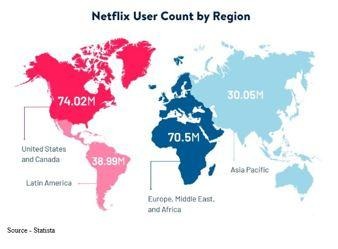
By 2010, things were going smoothly in the US, so they expanded service to Canadians with the steady inclusion of films/TV shows they licensed from studios/networks which they saw as another nice source of income.
But, in 2013, they moved from being a content distributor to producer with their first original, House of Cards and hired MRC and Trigger Street Productions to do the content hard work.
With 31.1M subscribers in the Americas, Netflix expanded into the Netherlands with the idea that people would like films/shows regardless of invisible country borders.
Suddenly (O.K., it took 12 years) they had so many subscribers it was so embarrassing to talk about the big number (about 320M) that they’d rather talk about the millions of hours of movies, shows, games and live events that people watch/play.
.
Around the clock, around the calendar, people in over 190 countries get entertainment legally on their home TVs, computers, tablets and smartphones from Netflix.
Of course, folks in countries like China, Crimea, North Korea, Russia and Syria (where they’re banned) watch too because the internet doesn’t recognize borders and people are smarter than governments give them credit for.
According to Statista, the market is projected from today’s $132B to about $625B by 2033, an annual CAGR of 20.40 percent.
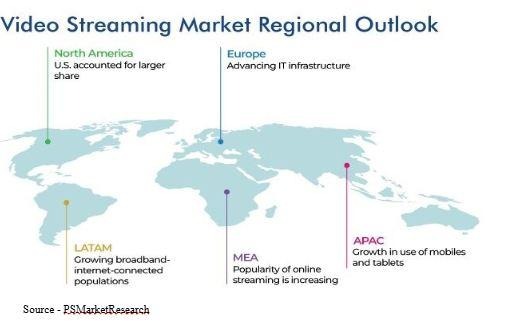
That kind of growth is so irresistible it has attracted tech giants like Amazon; Apple; Google (YouTube); China’s TenCent, iQIYI, Youku; and every major film/show studio; broadcast network plus 200 local/regional video streamers around the globe.
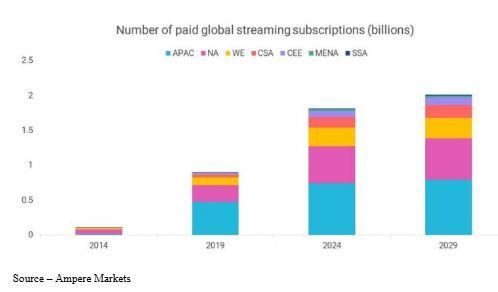
Saturation – While the US has the largest number of streaming subscribers, it has reached its peak of penetration and the real growth – and profits – will come from other regions of the world.
The growth, the potential is phenomenal.
It’s estimated that there are 8.2N people in the world and about 7.2B smartphones that receive great video content anytime, anywhere.
In addition, there are 2.2B households with 1.7B TV sets plus billions of computers and tablets that can receive streaming video.
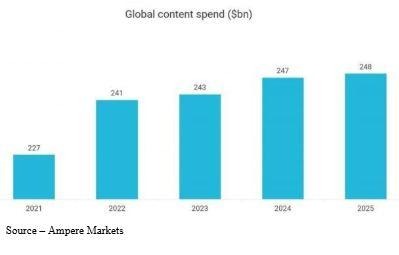
Investment – Streaming services continue to invest in new, fresh content to keep and acquire subscribers, especially internationally which require an increased volume of locally developed shows/movies.
Sure, there are tens of thousands of shows/movies you haven’t seen but you – and everyone else – had a visual/aural thirst for new, different, better content across the genre spectrum.
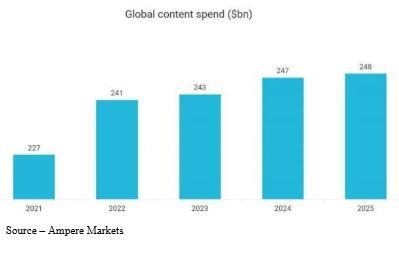
Meeting Interests – Because streaming services can closely monitor and analyze which shows/movies attract and keep viewers’ attention longer, they are able to greenlight projects people most want to watch.
And the global/regional streaming services have been hellbent on meeting that entertainment needs to keep you as a subscribing viewer.
That’s awesome news for the video content creation/production industry as well as (theoretically) for the estimated 441T men/women in the film/show industry and especially for 35 percent of the folks who are located in California, the video creation entertainment capital of the world.
A few years ago, anytime, anywhere, any device streaming of movies/shows became a real thing in the US content creation/production industry.
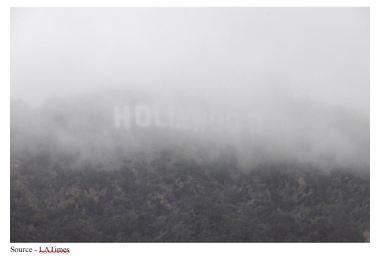
Unfortunately, it hasn’t been as bright and shiny as California officials and state-based executives first envisioned.
First, to sign up and show their shows/movies in the 190 countries where Netflix and the others have subscribers, they had to create/produce 30-40 percent of the content locally so that takes a big chunk of the content creation budget right off the top.
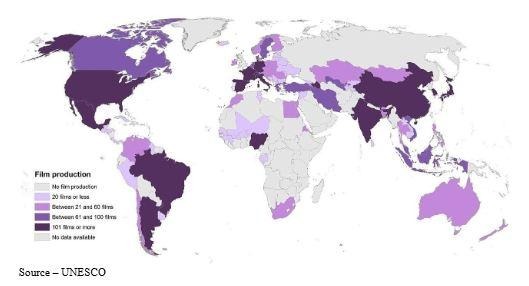
Throw a Dart – Almost every country has its own movie and TV show production industry with well-developed production facilities and people who want to do creative content.
That turned out not to be a hurdle for the streaming services but a benefit.
Every country around the world has a fledgling or highly skilled video content creation community that is ready, willing and able to create/produce great shows/movies that their audiences want to see and enjoy.
In fact, the film/video production market is expected to grow nearly five percent per year over the next five years thanks to the expansion of regional OTT platforms, rising demand for original and high-quality content and the rapid rise in international co-production.
In addition, the shows/movies were in demand in their surrounding countries so streamers could greenlight a great project like Counterstrike or City of God in Mexico or Columbia and people in every other South American country, city and village wanted to enjoy it.
Spending Sources – North American organizations spend more than other regions of the world but often it is produced or co-produced in another country.
And surprisingly, the films/shows were not only good, but their content creation budgets went further in these areas than they did back in the Americas.
Layered on top of those benefits was the fact that people in the Americas, EU, Africa, Asia and well, everywhere, really wanted to watch video stories created in another country on their own screens no matter where they live.
We used to have to go to a slightly rundown art theater while in college but today, we go to one of our three ad-supported services or our two FAST services and relive that entertainment thrill without the grime of the questionable pillows we reclined on. And we can enjoy new, refreshing, exciting films with the kids.
They’re so much better than “the good ol days” and the subtitles are more accurate and timelier than we recall.
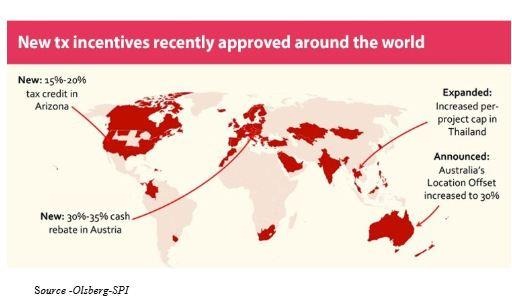
Tempting – Every country has assembled a tax and incentive program to encourage studios, project owners and indie filmmakers to create their next project in their country. Cities also have separate programs to entice people to pick their part of the country over the next town over. It isn’t the deciding factor but … it helps.
It also appears that the flow of international content won’t slow because every country is “bidding” to get studios/streamers to produce their new projects in their respective country.
Every country around the world has a national creative video content incentive program as well as strong and aggressive programs to encourage streamers/studios to greenlight their projects in their location.
For example, Canada has a national program in place as does the province of Ontario and the city of Montreal or the UK’s county of England and the city of London.
All of the national, regional and local programs are designed to incentivize project owners to create their shows/movies in their area and support the local creative development/production industry.
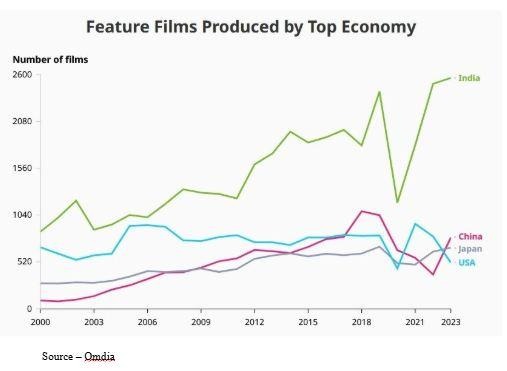
APAC – Films and shows from the APAC region are enjoying broad viewer acceptance in recent years as global streaming services offer a broader range of films/shows from everywhere.
While North America continues to be the world’s largest film/video production market, Asia-Pacific is expected to be the fastest growing region (dwarfing the US by sheer volume) followed by Central/South America, Europe, Africa and the Middle East.
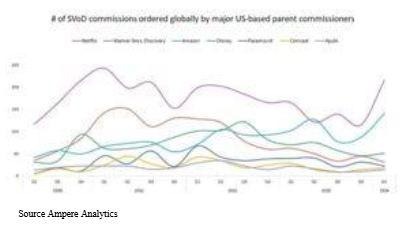
Global – All of the streaming services have increased their investment in local content production to meet the various country distribution requirements and at the same time meeting the viewing appetites of people across the region and around the globe.
And because of the growing acceptance (demand) for international shows/movies, the world’s leading streaming services are continuing to order and commission more projects globally.
Yes, the tax incentives and lower overall film/show production costs provide additional reasons for streamers and studios to develop new, interesting projects around the globe.
But according to Ampere, it’s the overall strength and potential of international shows/movies, rather than those from the US, that is enhancing the interest of US-based streaming services. More than 295 new international shows have been greenlighted compared to 202 American commissions.
The firm also noted that the dual strikes of 2023 also helped internationalize the video story industry and decentralize Hollywood as the center of the world’s show/movie industry.
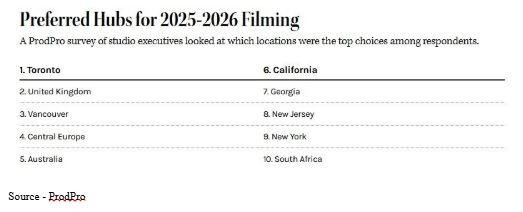
Yes But – California or more specifically Hollywood continues to be a strong center of the creative content industry and most recently for unscripted content but increasingly project owners and filmmakers have very tempting location offerings with advanced production facilities, broad pool of creation/production talent and yes, financial incentives.
In addition, international content centers are investing in attracting projects.
Pinewood Toronto just completed a mega film/TV studio in Toronto, while MELS (Mels Studio and Production) have expanded facilities and Vancouver has upgraded a number of studios.
More than two dozen studio projects in Scotland, London, Ireland and cities across the UK have been completed with more advanced facilities planned.
Major studios are being added in France, Italy, Germany, Poland and other EU countries.
New Zealand and Australia have increased and upgraded studios and projects are underway in nearly every Asian country.
While Saudi Arabia and Dubai have built massive state-of-the-art facilities, they have also opened major educational facilities to train people in the latest creation, production, post technologies.
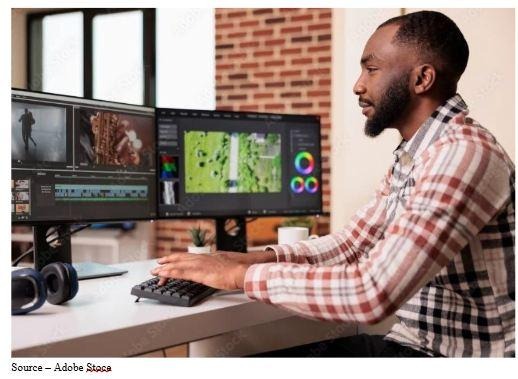
Global Pool – Because countries are investing in helping locals become proficient and experts in the various aspects of film/show production and the universal availability of internet connectivity, it doesn’t matter if work is done in Long Beach, Mumbai, Ruiru or Christchurch; producers can monitor post production progress as though the individual was down the hall.
Nigeria, Kenya, Ghana and South Africa are investing in studios and training local talent.
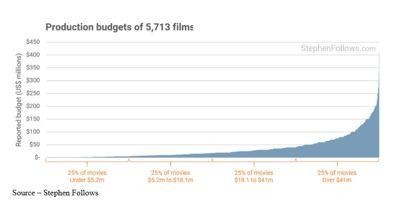
Big Picture – The blockbuster films get all of the media attention but the majority of projects which incidentally hire more people, more often are created with a much lower budget.
In most of the emerging video content production centers, new highly skilled people are also non-union, removing an added layer of cost for small/medium budget indie projects.
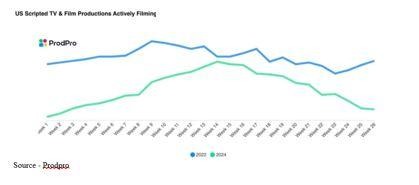
More Options – While there has been a slight downturn in film/show production in the US, many regions are feeling a major reduction of creative/production work because other areas of the country have siphoned off that business. In addition, the US may not be the production location of choice because of more fiscally and governmentally stable environments.
However, this is not to say that the major US studios and streamers have abandoned local production, even without a positive national entertainment activity.
Despite national policy and economic concerns, scripted shows and movies as well as unscripted and reality projects have given the US industry a slight lift and shoot day monitoring have shown an optimistic upturn in the local productions.
The challenge for California and the Hollywood infrastructure have not kept pace with their incentives; and perhaps more importantly, its creative program infrastructure.
New video content production center investments have been made in almost every state across the country – Texas, Arizona, New Mexico, Georgia, New Jersey, Illinois, Washington, Hawaii and even Alaska.
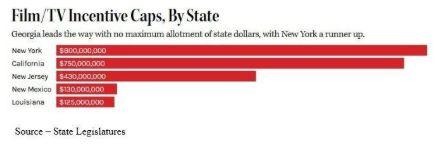
In addition, the states and cities have been creatively investing in their incentive programs to entice indie filmmakers, project owners and studio/streaming green lighters to do their next film/show/series in their area.
State and local governments note that much of the budget will be spent locally on housing, dining/entertainment/catering, transportation and support personnel as well as with local creative/production talent and suppliers.
While the financial incentives are important, many film/show executives cited the key reason for locating their project in Atlanta, Austin, Jersey City and even New York City was the minimization of shoot paperwork and approvals.
Rather than spending days, weeks and even months getting state, county, city and even borough/community signoffs/approvals: they noted that the processes were streamlined with one department/person being responsible for assisting the production team as much as possible.

It may seem like a small thing; but when producers, directors, crew members are living.
With a tight budget (time/money) every assistance is appreciated, even when it’s not stated.
Everyone who is involved in the production of a movie/series/show – scripted/unscripted/reality – understands what Waymond Wang meant when he said, “The only thing I do know … is that we have to be kind. Please, be kind – especially when we don’t know what’s going on.”
Andy Marken – andy@markencom.com – is an author of more than 900 articles on management, marketing, communications, industry trends in media & entertainment, consumer electronics, software and applications. An internationally recognized marketing/communications consultant, he has a broad range of technical and industry expertise–especially in storage, storage management and film/video production fields. He also has an extended range of relationships with business, industry trade press, online media and industry analysts/consultants.