
Maybe Theaters Should Do More Than Cry Over Spilled Milk
Insider 942 – Theater
By Andy Marken – andy@markencom.com
“Once an idea has taken hold of the brain it’s almost impossible to eradicate. An idea that is fully formed – fully understood – that sticks; right in there somewhere.” – “Cobb, Inception,” Warner Bros., 2010

Yes, we finally put our seat in a theater seat … first time since we can’t remember the last time.
When Joseph Kosinski’s F1: The Movie hit the theaters this summer we asked a fast car enthusiast friend – already anticipating the answer – if he had seen it.
His response, “OMG you’ve gotta see it but for gawd sake see it in an IMAX. It’s the only way to feel and hear the excitement of the race.”
He was right!
And when Apple TV+ finally made it available on streaming, we watched it again.
It was still good but not as exciting and adrenalin-pumping as on the IMAX screen.
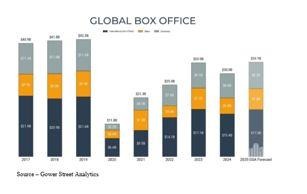
Movie theaters with more than 200,000 screens around the globe have been struggling to return to pre-2020 levels (attendance has steadily declined since 2002) following the pandemic and the crippling industry strikes and are projecting an 18 percent increase this year.
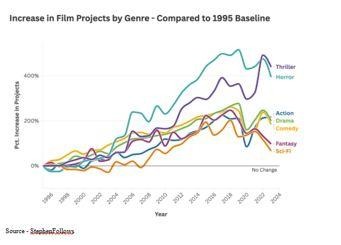
Tastes Shift – While project owners and producers may have a specific genre film in mind, they have to keep in mind that audience tastes change over time.
It’s certainly not for lack of content and variety.
While it’s difficult to pin down a precise number of feature-length films produced each year around the world, the World Intellectual Property Organization reported that more than 9,500 films were produced last year.
India leads the industry turning out more than 2,500 films, more than triple those from the next highest producer, China with about 800.
Japan turned out an estimated 676 films, topping the US’s output of only 510.
Studios and indies in every other country around the globe caught the creative fever to churn out projects in every genre and budget range.
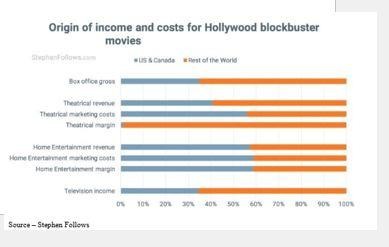
Hollywood and major studios around the globe need international theatrical releases to at least cover their massive investments so they can develop and hopefully profit from other distributions.
And there has been a boon of $100M films released this year in addition to F1 including Mission: Impossible – The Final Reckoning, Captain America: Brave New World, Wicked: For Good, Jurassic World Rebirth, Superman, Avatar: Fire and Ash, 28 Years Later, Together, Eddington, Nobody 2, Weapons, The Toxic Avenger, The Smashing Machine, Tron: Ares, Good Fortune, Mortal Kombat II, Frankenstein, Predators, Zootopia 2 and more.
Disney, Universal, Sony and Paramount don’t give their best projects to theaters first so they can have a chance for a statue (nice but…) Instead, they prefer to optimize their ROI and build up the word-of-mouth promotion when the project is released on streaming.
WBD’s Zaslav is equally as interested but he’s also been preoccupied in dividing up the company into a streaming/studio arm and global networks operation.
Even though he dumped $20B of the company’s debt load on the networks, he’s still left with $6B to pay off from his part of the firm, so he’s being a little cautious.
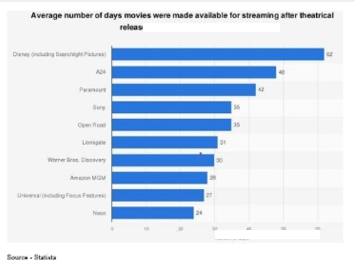
Since the pandemic and due to the fact that nearly all of the major studios all have a streaming service activity, theatrical windows have shrunk because they want to/need to expand their own services globally to catch up with Netflix and Amazon Prime.
At this year’s CinemaCon, +president Mike O’Leary made an impassioned plea to studios to commit to a 45-day theatrical window and aggressively market the films as “only in theaters,” noting that it would allow both parties (theaters/studios) to draw more people to fully enjoy the complete “theatrical big screen experience.”
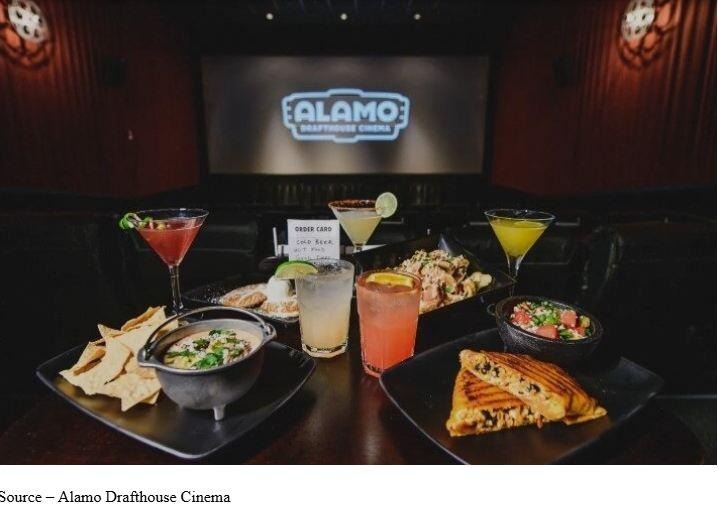
To expand the going to the movie experience, Alamo Drafthouse, with 45 locations across the country, added a full menu of food and drinks while New York City’s Metro Private Cinema’s 20-screen complex opened an even more upscale version complete with a gourmet menu and private dining.
With nearly 2,000 IMAX theaters around the globe, Richard Gelfond, the company’s CEO, is guiding the expansion and upgrading of the enhanced viewing experience to more than 75 theaters around the world.
It’s all part of the theatrical industry’s investment of more than $2.2B to upgrade the feel of going to the movies.
To really upgrade the experience, AMC Theaters is making the bold move to dramatically enhance the seats in the seats enjoyment by adding … commercials!
In addition to the normal 15-minutes of trailers of coming attractions, the company is adding a bunch of 30-60 sec. “platinum spots” and has said they will keep the complete preshow experience to a half-hour.
The goal, at least in the US, is to promote the magic of moviegoing.
Power Plays – Only a few have the power to insist their movie gets an exclusive theatrical window and a long one. Like him or not, Tom Cruise is one of them as with his lates MI film.
Everyone in the content creation/production industry wants to see their films first on the big screen.
However, few people in the industry have the audience clout of industry luminaries like Tom Cruise, Quentin Tarantino, Christopher Nolan or James Cameron to insist that their films must first appear on the big screen and for as long as possible.
There is still a small question with theater owners in the mainstay studio arena.
Sheri Redstone said she was sorry for “the guy’s” hurt feelings by paying $16M and settled the ridiculous 60 Minutes lawsuit. That probably removed the main stumbling block for David Ellison’s Skydance Media to purchase Paramount Global, the ailing movie/streaming company.
With a track record of more than 15 years in backing major tentpole productions and making millions from major and secondary films and working with major theater chains and international film distributors, he also understands the importance of theatrical window timing and knowing when films are available on streaming services such as their struggling Paramount +.
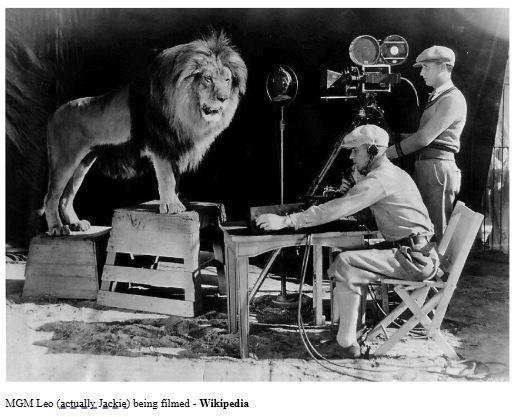
Amazon recently announced that their Amazon MGM studios — which owns a 100-year-old MGM IP library as well as the James Bond 007 franchise — would move forward this year with a more aggressive theater first program.
The company will be releasing as many as 15 titles annually to cinemas before they are available on their Amazon Video streaming service.
Apple’s Eddy Cue, a self-proclaimed Formula 1 fan, said that Apple TV+ is firmly committed to the movie business including traditional theatrical windows–especially for projects like the $250M F1 before streaming them to their subscribers.
So far, the company has mixed theatrical results with the big-budget Argyle bomb but modest returns with Napoleon. And yes, they were able to track solid subscription sign-ups with Killers of the Flower Moon which also earned 10 Oscar noms.
They’re thinking harder about theatrical release movies, especially now that they’re basking in the glow of F1.
Netflix has built its global streaming leadership (310M plus) and has a complex relationship with movie theaters.
Cinema owners say the company and many of the projects could strongly benefit (well yes, the owners could as well but…) with a realistic theatrical window release.
But their window range remains from 10-45 days based on their perceived cultural impact and award potential.
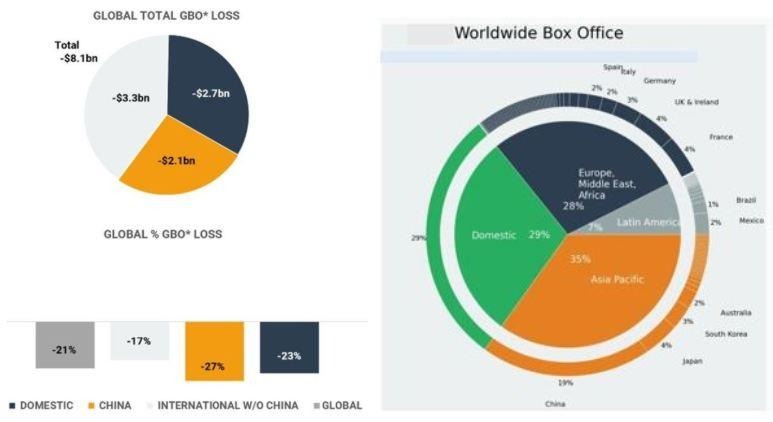
Source – Gower Street Analytics
Theater attendance hasn’t recovered to its 2019 level – globally down an average of 22 percent – but theater
chains and studios are optimistic about the industry’s recovery over the next two years.

The premium theatrical experience – IMAX/70mm screening, enhanced dining, exclusive formats and more immersive sound – plus stand-out local projects have helped attract people back to movie houses in China, South Korea, UK/Ireland, France, India and Japan which are showing the best recovery.
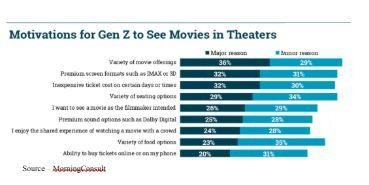
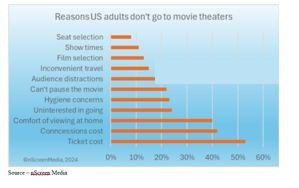
But cinema management needs movie house owners to share the blame for people pulling a no-show to theaters if they are to hope to recover and thrive.
Theater owners also need to moderate the concession costs which deliver high margins and aren’t shared with film distributors.
And frankly, sitting through 30-plus minutes of trailers before the film people paid to see may catch the attention of a few future ticket sales but frankly it is a ridiculous distraction for most of the folks.
Three trailers are enough, and the rest can be available on YouTube or the theater’s website.
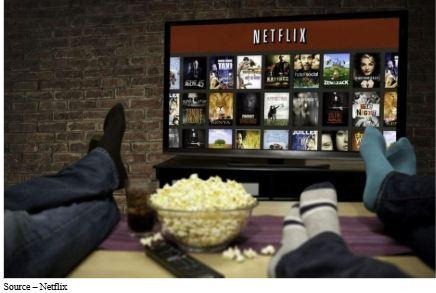
Like most normal people, we like movies, but we don’t buy into the myth that the best way to watch them is in a big dark room with vibrating surround sound with a couplet cacophony of other perfect stuff going on around us from imperfect strangers.
The screaming and hollering doesn’t impress us much!
We can ask people in our viewing environment to shut up or go to their room to watch their
own stuff on their own TV.
It’s not a cool idea to do that in a packed theater of strangers.
+
The smartphone calls, texts or screen grabs and shared selfies may be fun for a few but we put our
seat in the seat to watch the movie!
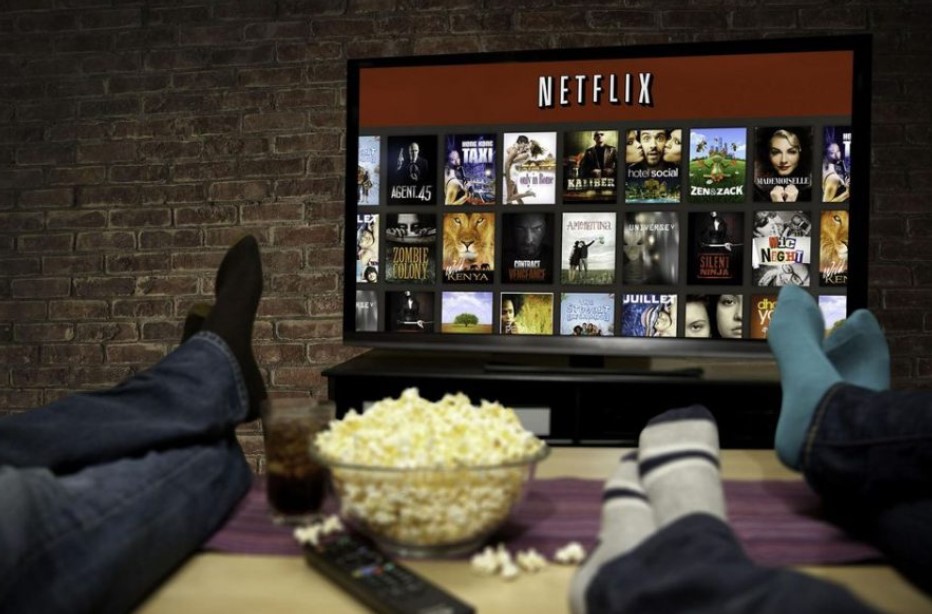
Today, it’s way too easy – and inexpensive – to go into our TV room and on the-spur-of-the-moment decide we’re going to watch a movie.
Usually, we have some movie in mind; but often we don’t, other than knowing there are a bunch of really good
movies we’ve heard about that seem rather interesting.
And we can do what has become normal over the past few years.
Turn on the big screen TV, go to one of our favorite streaming services and pick one that is fresh, interesting and worth our time … without all of the extra noise, expense and hassle, because despite what theatre owners want, consumers want their movies … now!
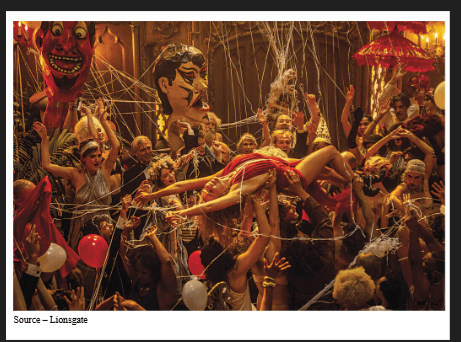
And increasingly, streamers and studios are making it easier for us to watch a video story and escape from the real world–at least for a few hours.
In addition, they are making it more economic.
It also means that streaming has given creative professionals a faster way for them to experience their talent and expertise which is the real goal for any/every producer, director, actor, production crew member and post- production talent – to get people to enjoy and experience their creative work.
….
After all, the writing, acting, production and post talents all share one common goal as Eames explained in Inception, “If we are gonna perform Inception then we need imagination.”
Regardless of how people view/experience their film – in a crowded theater or in the comfort of their own home, content professionals have delivered their product.
Then it’s up to the viewer to determine which viewing platform he/she prefers to escape into and experience the creators’ dreams.
Sometimes it will be on the really big screen, sometimes on the big screen and occasionally on the screen in our hand.
Everyone deserves a choice.
Andy Marken – andy@markencom.com – is an author of more than 800 articles on management, marketing, communications, industry trends in media & entertainment, consumer electronics, software and applications. An Internationally recognized marketing/communications consultant, he has a broad range of technical and industry expertise, especially in storage, storage management and film/video production fields. He also has an extended range of relationships with business, industry, trade press, online media and industry analysts/consultants.